
Maximizing Real Estate Sales with Digital Marketing
Real estate digital marketing connects property listings and professional expertise with people considering their next move. The goal is not simply more website traffic: it is more relevant inquiries, productive appointments, and opportunities to close.
Real estate digital marketing connects property listings and professional expertise with people considering their next move. For agents and brokerages, the goal is not simply more website traffic: it is more relevant inquiries, productive appointments, and opportunities to close. A practical strategy brings search visibility, useful content, advertising, and follow-up together, with each channel supporting a clear next step.
The place to start is the relationship between what prospects need and what your marketing asks them to do.
How does digital marketing support real estate sales?
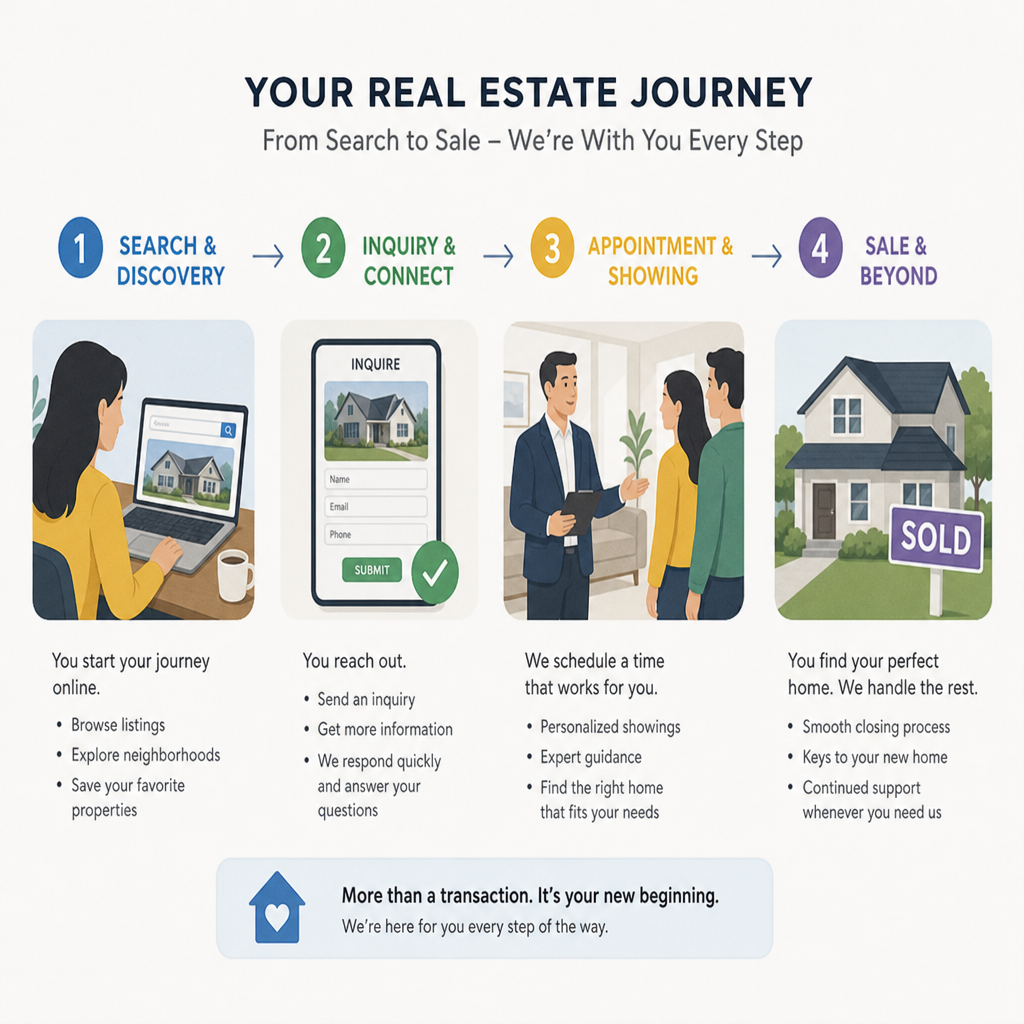
Digital marketing supports real estate sales by helping prospective buyers and sellers discover your business, evaluate your expertise, and initiate a conversation. Build your strategy around that progression rather than treating every impression or form submission as equally valuable. Someone comparing neighborhoods needs a different experience from a homeowner ready to discuss listing a property.
Before choosing channels, define three things:
Your business priority: Decide whether you need listing appointments, buyer consultations, or inquiries about particular properties.
Your service focus: Identify the locations and property types you can discuss with genuine knowledge.
Your next step: Choose an action that fits the visitor’s intent, such as requesting a showing or arranging a valuation discussion.
For example, pair a seller-focused article with a consultation invitation—not an unrelated property search. That connection gives each campaign a purpose and makes its results easier to evaluate.
Build a website that earns the next conversation
Treat your website as the working center of your real estate marketing. It should explain where you operate, what services you provide, and how visitors can reach the right person. Think of this digital real estate as a space to demonstrate expertise, not merely display branding.
Give property pages enough detail to support a decision. Include accurate descriptions, clear photography, available floor plans, and current listing information. Describe practical features—such as storage, outdoor space, or renovation details—rather than relying on vague praise.
Use this checklist before sending traffic to a page:
Match the promise: Show the property, location, or service mentioned in the ad or search result.
Make mobile tasks simple: Test image viewing, navigation, telephone links, and form completion on a phone.
Reduce unnecessary friction: Ask only for information needed to handle the initial inquiry.
Explain what happens next: Tell visitors who will respond and what the conversation will cover.
Keep essential information visible without forcing registration. Invite contact when you can offer meaningful help.
What should real estate SEO prioritize?
Real estate SEO should prioritize useful local information, clearly organized pages, and content that search engines can discover and understand. Google’s guidance emphasizes logical site structure, descriptive page titles, relevant links, and helpful content rather than tricks that promise first-place rankings. Use those principles to build pages around genuine buyer and seller needs. (developers.google.com)
Create distinct pages for your main services and the areas you genuinely serve. A neighborhood guide might explain housing styles, transportation options, public amenities, and practical considerations for evaluating properties. Verify local details and avoid unsupported claims about future prices or investment returns.
Connect related resources with descriptive internal links. A guide to preparing a home for sale can point readers toward your seller service page; an area guide can lead to relevant available listings. Google uses links to discover pages, so useful connections also support discoverability. (developers.google.com)
For an eligible business, maintain a complete, accurate Google Business Profile. Google identifies relevance, distance, and prominence as central local ranking considerations; complete information and authentic customer reviews support that broader local presence. Do not promise that profile changes will overcome distance or guarantee placement. (support.google.com)
Review pages when information changes. Remove outdated availability claims, repair broken links, and update local resources rather than continually publishing near-identical articles.
Turn expertise into content people can use
Choose content topics from the questions you hear during appointments. Explain how sellers can prepare for photography, what buyers should examine during a second viewing, or how to compare properties beyond their asking prices. Give readers a practical framework, not a sales pitch disguised as advice.
Build several useful assets from one topic. A property-preparation article could become a short video, a downloadable checklist, and a series of social posts. Adapt each version to its format rather than copying the same paragraph everywhere.
For property videos, show how rooms connect and identify features that photographs may leave unclear. For educational posts, explain one decision thoroughly. End with a relevant invitation: someone reading about preparing to sell may welcome a discussion about their home’s presentation, while someone watching a tour may want a showing.
Make real estate advertising specific and accountable
Organize real estate advertising around a defined offer and destination. Start with a manageable campaign you can evaluate: one service, one relevant geographic market, and one clear action. Avoid spreading a limited budget across unrelated objectives before you know which inquiries your team can serve effectively.
Keep buyer and seller campaigns separate where their messages and destinations differ. A search ad offering a seller consultation should lead to a page explaining that consultation, not a homepage requiring visitors to find it themselves.
Housing advertising also requires careful targeting choices. For example, Google restricts targeting by age, gender, parental status, marital status, and ZIP code for housing ads in the United States and Canada. Meta goes wider: its Special Ad Category for Housing applies to advertisers reaching the United States, Canada, the United Kingdom and Europe, and once an ad is declared under it, age and gender targeting, postcode targeting, location exclusions and lookalike audiences are all removed. Check the current requirements of every platform before launching or changing campaigns; do not assume ordinary advertising settings apply. (support.google.com)
Test one meaningful variable at a time, such as the offer or landing-page introduction. Compare inquiry relevance and appointment outcomes, not clicks alone. Pause campaigns that consistently generate unsuitable requests, investigate the mismatch, and revise the message before increasing spending.
Make follow-up part of the marketing plan
Plan what happens after an inquiry before attracting more inquiries. Assign responsibility, establish a realistic response process, and record the prospect’s request so the next conversation starts with context. Avoid making people repeat information they already supplied.
Use a customer relationship management system to separate contacts by their stated needs and timing. Someone asking for a showing needs a different response from someone researching a possible move next year.
A useful follow-up sequence can include:
Acknowledge the request: Confirm what was received and identify the person handling it.
Answer the immediate question: Provide the requested information before introducing other services.
Agree on the next step: Offer an appointment or relevant resource without manufacturing urgency.
For ongoing email, explain what subscribers will receive and provide a straightforward way to stop messages. Keep communication useful rather than repetitive.
When should you hire a real estate digital marketing agency?
Consider hiring a real estate digital marketing agency when your team lacks the time or expertise to manage an important part of the customer journey consistently. Define the problem first. Weak local visibility, unclear landing pages, and poor follow-up require different work; buying a broad package without a diagnosis can leave the original issue unresolved.
Ask any digital marketing agency to explain its proposed priorities, deliverables, measurement approach, and responsibilities. Request a sample report and ask how it distinguishes an inquiry from a qualified conversation or appointment. Clarify ownership of advertising accounts, website assets, analytics access, and creative materials before signing.
Look for a partner willing to discuss limitations and dependencies. Marketing cannot resolve inaccurate inventory, unanswered inquiries, or a service experience that contradicts the promise. A useful proposal should identify what the agency will handle and what your team must contribute.
Measure progress toward sales, then refine
Choose measurement that reflects business progress. Google Analytics allows important actions to be marked as key events, making it possible to evaluate actions such as completed inquiry forms across marketing channels. Configure and test those events rather than assuming every button click represents a lead. (support.google.com)
Connect website reporting with your sales records. Track relevant inquiries, appointments, signed agreements, and closed transactions where your systems allow. Review cost alongside quality, and recognize that a transaction may involve several marketing touchpoints.
The practical takeaway is to strengthen the whole journey before chasing more reach. Start with a clear audience need, offer a useful destination, and make the next conversation easy. Then use actual inquiry and sales outcomes to decide what deserves more attention—and what needs fixing.
Written by Foreground Digital. Start a project →