
AI Overviews on 48% of searches: the organic CTR cost
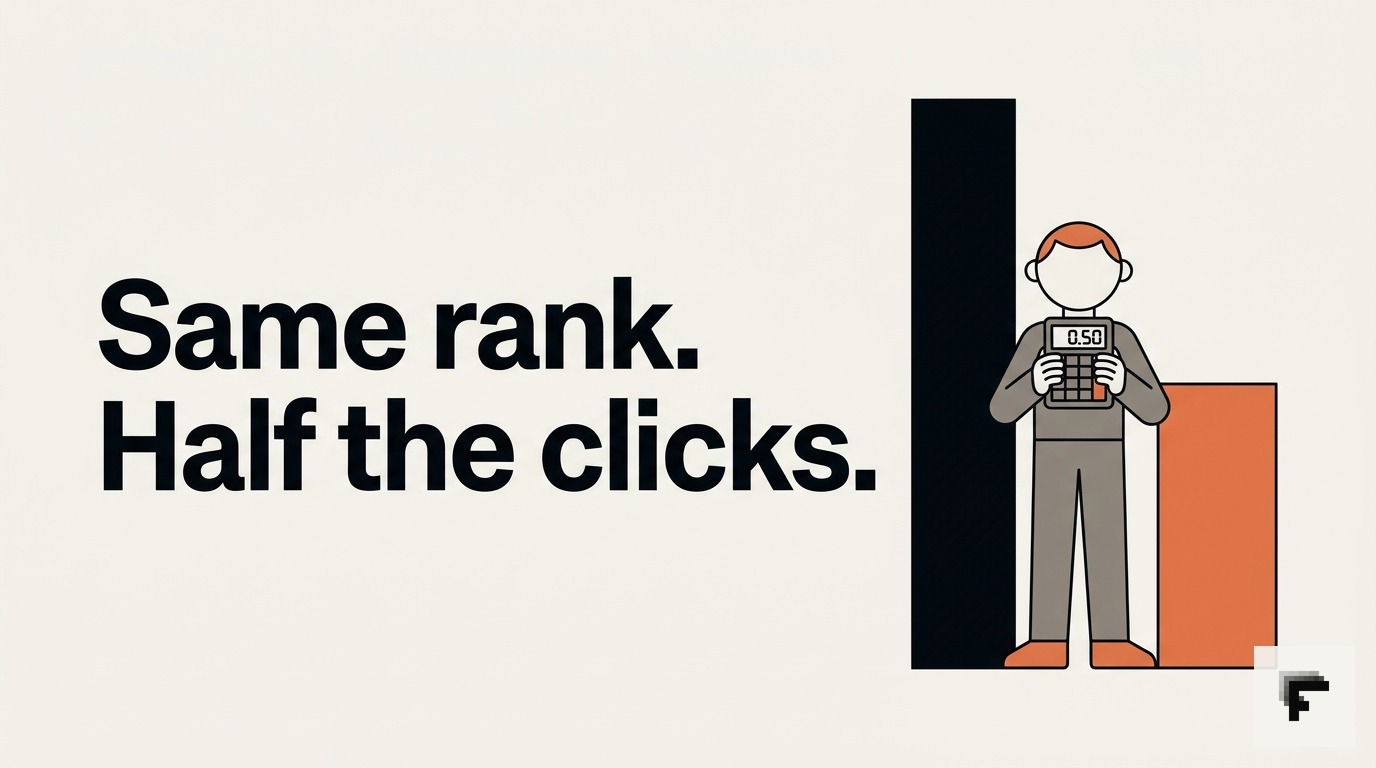
The CTR a top organic result earned in 2024 has been quietly cut in half. AI Overviews now appear on 48% of searches, and the math of the SEO playbook has changed underneath everyone who has not noticed.
The CTR you saw on page 1 in 2024 has been quietly cut in half.
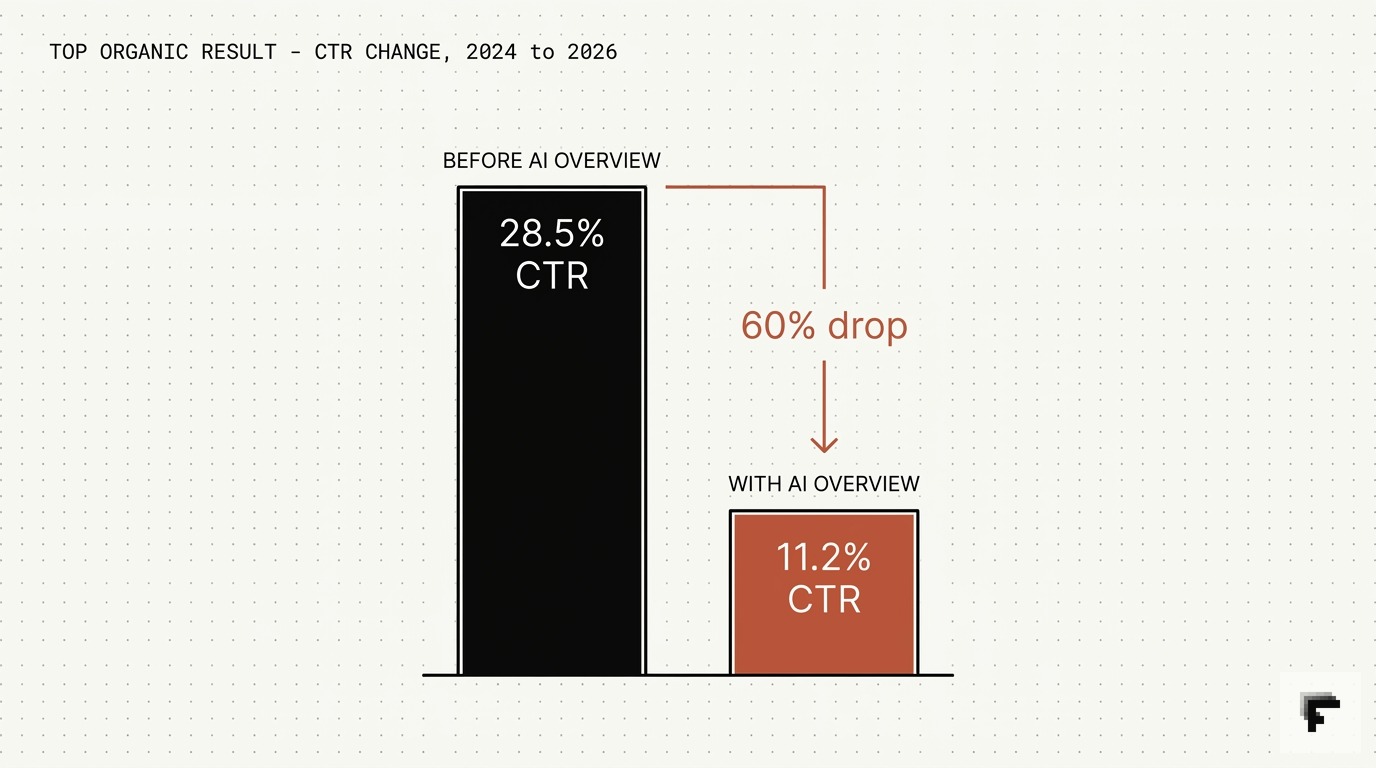
As of March 2026, 48% of all Google searches now show an AI Overview at the top (Launchcodex analysis, 2026). When one appears, the top organic result's click-through rate drops from 28.5% to 11.2% (The Slide Factory, 2026). The drop is not theoretical. It is the new baseline.
A 60% CTR decline on the top organic position changes the math of the entire SEO playbook. Sites that built their forecast around "ranking 1-3 means X clicks" are now hitting that same position at a fraction of the yield. The volatility from the May 2026 core update compounds it. Positions are shifting on top of a CTR floor that has already moved.
Not every query is affected equally. The pattern across the data:
- Informational queries (definitions, "how does X work", "what is X") trigger AI Overviews most often. CTR has dropped most steeply here. The AI Overview frequently satisfies the user's need without a click.
- Transactional queries ("buy X", "X near me", "X price") trigger AIO less often. CTR is closer to historic norms. Maps and shopping carousels were already eating clicks there before AIO arrived.
- Local-intent queries in regulated verticals (legal, medical, financial) often skip the AI Overview entirely. Google still leans on its trusted-source frameworks for those. The 9% chatbot retrieval share Google reported at I/O (Google's chatbot share is still only 9%) hides the fact that AIO concentration on informational queries is closer to 70-80%, while local-intent queries are barely touched.
The vertical pattern is the most useful number to know. If you publish a lot of guide content, your CTR has already moved. If you sell a product with high commercial intent, less so.
Call this the citation-not-click economy.
The next-tier reward for ranking is no longer a click. It is being the source the AI Overview names when it generates its answer. 92% of citations inside Google's AI Overviews come from domains already ranking in the organic top 10 (Search Engine Land, 2026). Ranking is still the entry ticket. The exit, though, is now citation density inside the AI Overview itself. Structured content the model can pull cleanly. Entity-anchored identity through schema and Wikidata. Earned third-party mentions the AI engine has already learned to trust.
AI engines retrieve, they do not rank, which means the repair work for AI Overview citation looks different from classic SEO. The real estate SEO playbook for 2026 walks through the structural changes the property vertical has been making, which apply to most other verticals on a six-to-twelve-month lag. Anyone running a 2024 SEO program against a 2026 SERP should run the free 2026 SEO Audit before allocating another quarter's budget.
The bigger picture is that AI Overviews are not the destination of the next SEO shift. They are the bridge. The destination is the recommendation gap between organic rank and AI surface, which is now wider than the gap between page 1 and page 2 used to be. Pretending the click economy is unchanged because some queries still convert at historic rates is the more dangerous error than chasing the AIO too hard.
Written by Foreground Digital. Start a project →